
My Outlook on the Robotics Ecosystem

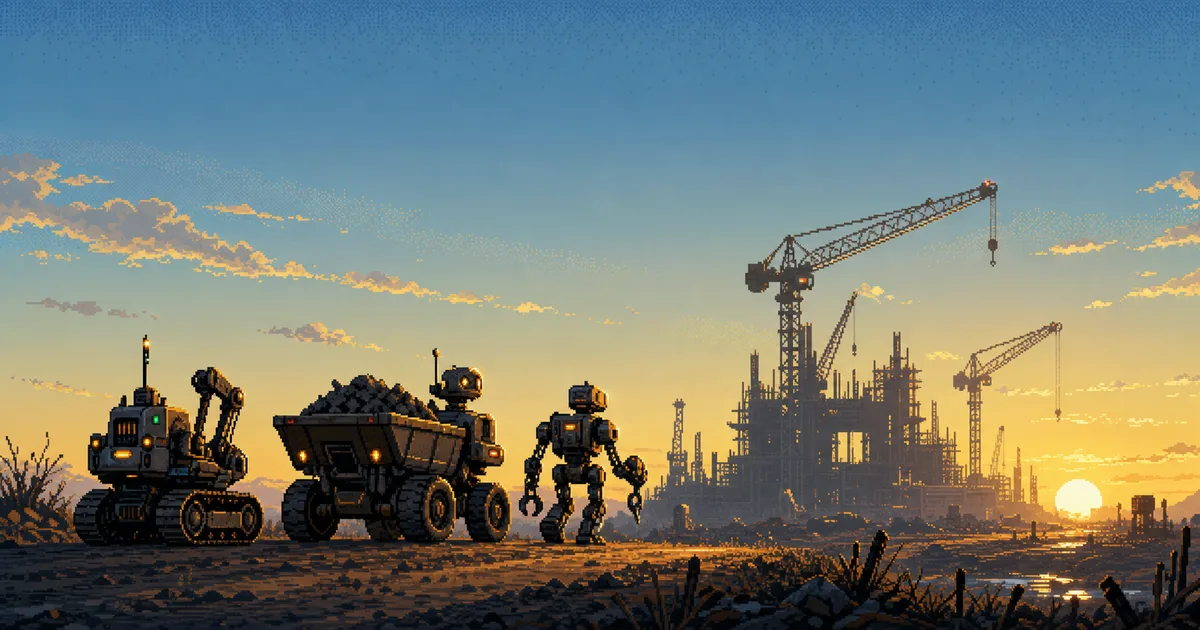
I have been watching robotics closely, and something has shifted in recent years. For years the field promised more than it delivered. That gap is finally closing. Here is how I think about what is coming, why now, and where I see room to build.
What I see coming
Far more robots in factories, warehouses, commercial spaces, and eventually on city streets over the next few years. Not overnight. But the direction is clear.
Why now
-
For decades, most robots were powerful but narrow. They followed hand-written logic and repeated fixed motions. That is starting to change. Vision-language-action models1, 2 are moving robotics from brittle, task-specific automation toward systems that can understand instructions, perceive the world, and adapt.
-
Defense changed the urgency. Warfare has moved rapidly toward unmanned systems, and every major military is now racing to build, buy, and deploy autonomous capabilities.
-
At the same time, the physical workforce is aging out faster than it is being replaced3. Welders, electricians, and technicians are retiring. Robots will scale first where work is physical, repetitive, dangerous, or simply hard to staff.
-
And autonomy is already a real business. Waymo is now doing more than 500,000 paid autonomous rides per week4, up roughly 10x in less than two years. That is no longer a science project.
-
Investors see it too. Robotics startups raised 15 billion dollars in 2025. And 2026 has already topped that: 18.8 billion raised by mid June5.
Where I see opportunities for founders and investors
-
Every robot is a bundle of cameras, sensors, motors, batteries, and chips. Fleets at scale will create structural demand for all of these components. Expect specialized companies to emerge, each making one part better than anyone else.
-
On a construction site a robot has to know which beam to weld today, where materials were dropped this morning, and what changed in the plan since yesterday. Every day the site looks different. We will see more software (AI agents) that orchestrates robots in changing environments.
-
The same site will run different brands, versions, and kinds of robots. One welds, another lays bricks, a third hauls materials. Someone's software will have to speak to all of them and make them work as one crew.
-
Robots will differ in skills the way AI models do today. One excels at picking and placing, another at welding and painting. Expect startups that fine-tune robots for a specific task, benchmark their skills, and match the right robot to the right job.
-
Robots will break things, and people will break robots6. Sooner or later a robot will scratch a car or drop a pallet. We will see more software that helps figure out what caused the damage and helps insurers cover expensive robots and the risks around them.
-
Robots that see, hear, and speak around the clock will burn billions of tokens per second around the globe. Where to run that inference will be a huge question: on the robot, at the edge, or in the cloud. Not every robot will carry a GPU. They are expensive, and it makes little sense to pay for one that sits idle while a robot charges or waits for work. So expect more modular data centers close to the fleets, keeping data private while sharing GPUs across robots.
-
Training is a different story. Teaching robots new skills and building the next generation of models will demand massive GPU data centers, and the demand will only grow with every robot deployed.
The bottom line
The robots themselves will get most of the attention, and they should. The harder, quieter opportunities are in the software, the parts, and the services a world full of robots will need.
It will be interesting to see who builds them.
Sources
- Google DeepMind: RT-2 translates vision and language into action
- Physical Intelligence: π0, a generalist robot policy
- Deloitte: the labor impact on US manufacturing
- TechCrunch: Waymo's skyrocketing ridership in one chart
- Crunchbase News: robotics startup funding surges
- TechCrunch: Waymo robotaxis set ablaze during LA protests

About The Author:
Val Kamenski is a fractional CTO, board advisor, and startup mentor with over 14 years of experience building and scaling software companies. He now helps founders and executives make better technology decisions, and navigate the fast-changing world of AI and software development.